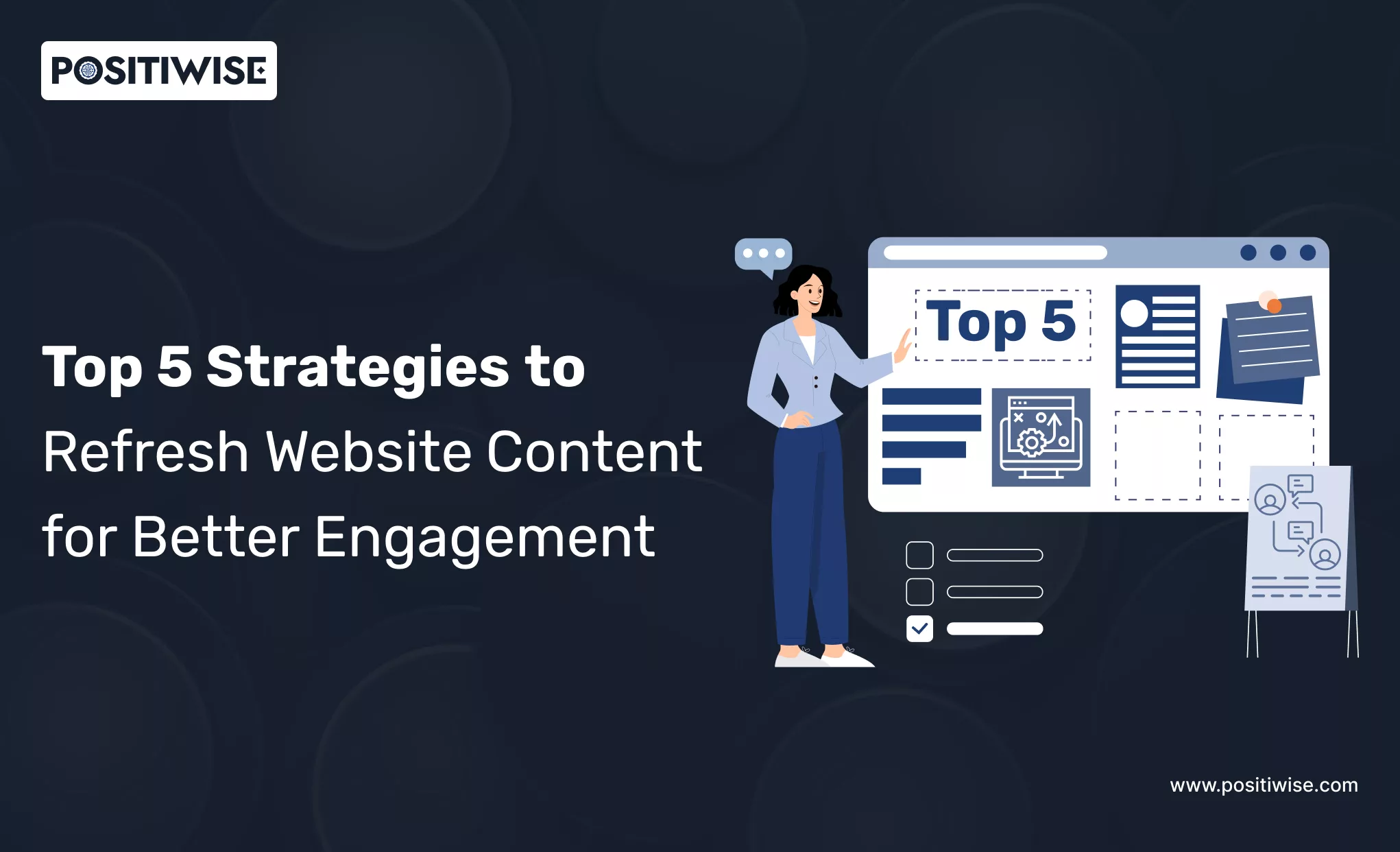
While churning out original, compelling content on a regular basis to make your website stand out is a necessity, you can’t overlook the need to give existing published information a fresh touch. Refreshing existing website content not only leads to higher search engine rankings but also benefits a brand in multiple other ways.
It boosts organic traffic coming to your website, keeps the content relevant and up-to-date for higher engagement. Updated, accurate content also elevates user experience and credibility of your website. Refreshing content also provides you the opportunity to stay aligned with emerging trends, embed new inbound links for higher authority, and generate an optimal number of conversions.
Conversely, turning a blind eye to the process of updating your existing website on a regular basis could turn out to be a grave mistake. You only need to implement several effective strategies to make it possible.
Here is a breakdown to help you learn these strategies:
1. Conduct a Content Audit Regularly
Identifying underperforming content and loopholes that are compromising the online visibility and authority of your website should be your top priority. The perfect way to spot such elements is to conduct a thorough content audit.
So, audit your website content regularly to:
Analyze Page Performance
First of all, you should be aware of the performance of each page on your website. So, set clear goals, define KPIs (key performance indicators), and leverage advanced tools to get your hands on the reports displaying various noteworthy metrics that reflect the performance of each page.
Doing so will help you easily identify pages with subpar performance and worrying metrics, such as:
- High bounce rate
- Low traffic
- Poort engagement
Fetch Insights
Once you have identified underperforming web pages with subpar KPIs, it is time to determine the core reason behind their poor performance. The best way to do so is to fetch insights from feedback left by users through comments. Following this approach will help you easily pinpoint unclear, outdated, or unsatisfying content.
Spot Duplication
Pages with similar content on your website can also impact its online visibility and lead to lower search engine rankings, diluted backlink authority, mitigated online exposure, and penalties.
You must identify content duplication on your website by using:
- Search console
- Analytics
- SEO spider tools
- Manual search
- An advanced Online Plagiarism Checker
- A comprehensive review of the sitemap
Prioritize High-Potential Content
Once you have identified various shortcomings through a content audit, it is time to fix them. You can prioritize high-potential content that covers evergreen topics to improve your performance. Research topics you have already covered and look for fresh insights capable of adding value to the lives of your target audience. Naturally integrate newly found insights into your content to enhance its value and relevance.
Fix Duplicate Content Issues
Additionally, work on resolving issues identified by reviewing user feedback to enhance the user experience.
You must also resolve duplication issues on your website by:
- Implementing canonicalization
- Employing 301 redirects
- Updating sitemap
- Localizing content
- Specifying a distinct purpose for each page
- Applying meta “Noindex” tags
- Consolidating content
- Ensuring unique meta tags
- Managing URL parameters
Also Read: WordPress SEO: How to Optimize Your Website for Search Engines
2. Add Newly Researched Material and Update Information
The modern-day audience craves fresh insights. Covering a compelling, evergreen topic once won’t do the trick. You must keep updating existing content to ensure its relevance to the evolving needs of the target audience.
Here is how you can make it possible:
Focus on Accuracy
You can’t simply fetch random insights from here and there and add them to your content for the sake of updates and a fresh look. Doing so may lead to compromised credibility. Cross-check newly found insights with reputable sources to verify their authenticity.
Once you are confident about the authenticity of newly researched material, it is time to replace outdated statistics, links, and information with it. This practice will help you ensure that your audience learn the most current data and facts every time they access your website.
Enforce Your Authority with New Research
Replacing dated facts and figures with new data and calling it a day would be a foolish approach. You should inform your audience of the reason behind evolving trends and why the newly added information is authentic.
Making it possible is not as tricky as you may think. You only need to incorporate recent studies to back your claims. Additionally, you can think of adding new sections to previously published content and expanding on existing topics to demonstrate your thought leadership and engage visitors.
Fill Knowledge Gaps
Researching topics to update your content will also lead to the revelation of various knowledge gaps that are still unaddressed. These gaps provide you with the opportunity to stay ahead of your competitors, capture the attention of your target audience, and keep them engaged.
All you need to do is come up with answers to unanswered questions and fill in new information. You can do this by discussing new developments in your domain or niche to ensure that your content is comprehensive and useful enough to add value to the lives of users.
3. Incorporate Engaging Visuals and Interactive Elements
Relying solely on text to engage customers in the modern digital era is nothing but a foolish approach. You must leverage all resources to engage the audience and make them stick to your content.
Incorporating engaging visuals and interactive elements will do the trick for you:
Support Textual Information with Engaging Visuals
Anyone would become fed up with reading long blocks of text that require a significant amount of time and effort. Structure your content strategically to promptly grab the attention of visitors, especially those who prefer skimming content.
The presence of relevant images, infographics, and videos will engage such visitors who will stick to your content and pay attention to it right from the beginning until the very end. So, break up long blocks of text by adding the aforementioned blocks of text and enhancing the appeal of your content.
Integrate Interactive Features into Your Content
You may successfully grab the attention of anyone, but increasing their interest in your content and keeping them engaged is another feat. It is only possible when your content incorporates multiple interactive elements that sound appealing and intriguing to an average Joe.
So, integrate various interactive features into your content to make it more appealing. You can incorporate elements like quizzes, polls, ratings, and even UGC (user-generated content) in textual or visual forms to encourage and enhance user interaction that leads to better dwell times.
Engage Users with Storytelling
Nothing works better than strategic storytelling when it comes to keeping readers engaged. Focus on integrating relatable stories and analogies into your content to tailor it to your audience. Doing so will not only make your content memorable but also help you build a connection with users.
The integration of relatable stories that are tailored to your target audience makes your refreshed content more memorable and impactful. By improving storytelling, you can reaffirm the authenticity and organic look of your content so that your audience doesn’t doubt its authenticity.
4. Focus on Search Engines and User Intent
You can’t think of achieving higher search engine rankings and increasing the online exposure of your website until you pay attention to optimizing your content for SEO and user intent.
In addition to updating your content, you should also optimize it strategically by working on the following tips:
Perform Frequent Keyword Research
Researching keywords and integrating them into your content once is not enough. SEO is an ever-evolving concept that requires you to stay aligned with the changing needs of search engines and users alike. So, performing keyword research frequently should be your priority.
Doing so will help you figure out and incorporate relevant keywords that are aligned with ever-changing search intent. The incorporation of newly found relevant keywords will help you boost your content’s visibility and drive more organic traffic.
Consistently Revise Meta Descriptions
In addition to making tweaks to content published on various pages of your website, you must also consider modifying its meta descriptions from time to time. Turning a blind eye to this practice may make your descriptions look dated and irrelevant.
Search engines also take notice of meta descriptions and change website rankings accordingly. Users also judge the relevance of content based on descriptions displayed on SERPs (search engine results pages). So, make your meta description more compelling and accurate with regular revisions.
Inspect Internal Links
Well-linked web pages suggest a properly thought-out structure and hierarchy of a website. Additionally, functional internal links make it easier for search engines to determine the relevance of one page to another.
Broken or non-functional internal links can make it challenging for search engines to determine the connection between multiple pages. Additionally, such a situation may also confuse search bots, leading to a wasted crawl budget, so ensure functionality and relevance of all internal links.
Also Read: Voice Search: Optimizing Your WordPress Site for Voice Assistants
5. Improve Content to Elevate User Experience
An optimal user experience should be your top priority if you want to get better engagement. Failure to do so will not only lead to lesser engagement but also lost trust of the target audience. Hence, you should focus on improving content structure.
Here are a few tips to help you make it possible:
Focus on Enhancing Readability
Many visitors find it challenging to stick to the content because it is hard to read and less engaging. These traits make them give up the idea of consuming information published on a page of a particular website. Your goals should be to prevent users from leaving your website and accessing another source to consume valuable information.
You can easily achieve this feat by enhancing the readability of your content. Start the process by reviewing your content while keeping an eye out for large chunks of text, jargon, and unnecessary information. After spotting such elements, think of eradicating them by rephrasing the content. It is better to offload the task to an AI-driven Online Paraphrase Tool for enhanced readability.
Additionally, consider ensuring the following elements in your content for better clarity and easy skimmability:
- Shorter Paragraphs
- Subheading
- Bullet Points
- Bold Text
Ensure Mobile-Friendliness
Most netizens do web browsing with their smartphones because it offers them easy usability and mobility, which is impossible with bigger devices such as laptops and desktop PCs. So, keep this in mind while refreshing your content and pay special attention to mobile-friendliness.
The structure and layout of your content should be designed strategically so that it can appear responsive and accessible on every device, without any page loading delays. Failure to do so will surely compromise user experience, resulting in lesser engagement.
Embed Strategic CTAs
In addition to consuming valuable information, netizens access a web page to get necessary guidance regarding the next step. However, if they fail to find instructions about the next step, they feel disappointed and directionless.
You must avoid such a scenario by strategically embedding CTAs (calls to action) into your content. These CTAs should be compelling and clear enough to ensure that your readers don’t find it challenging to find one. Focus on making them a natural part of your content and clearly visible to an average Joe with bold or colored text.
To Conclude
Refreshing website content for better engagement is essential to keep your website on top of search results. In addition to regularly churning out fresh, quality content, you must also focus on auditing your website, adding newly researched material to published information, and incorporating engaging visual elements. You should also optimize content and update its structure for enhanced online exposure and elevated user experience. We have discussed all these strategies in detail above to make the process easier for you. So, consider the takeaways and thrive in your niche! Need expert advice or a Digital Marketing Service to boost your online visibility? Reach out to our experts.


Expert in Marketing Strategy and Brand Recognition
Jemin Desai is Chief Marketing Officer at Positiwise Software Pvt Ltd, he is responsible for creating and accelerating the company’s marketing strategy and brand recognition across the globe. He has more than 20 years of experience in senior marketing roles at the Inc. 5000 Fastest-Growing Private Companies.