Introduction
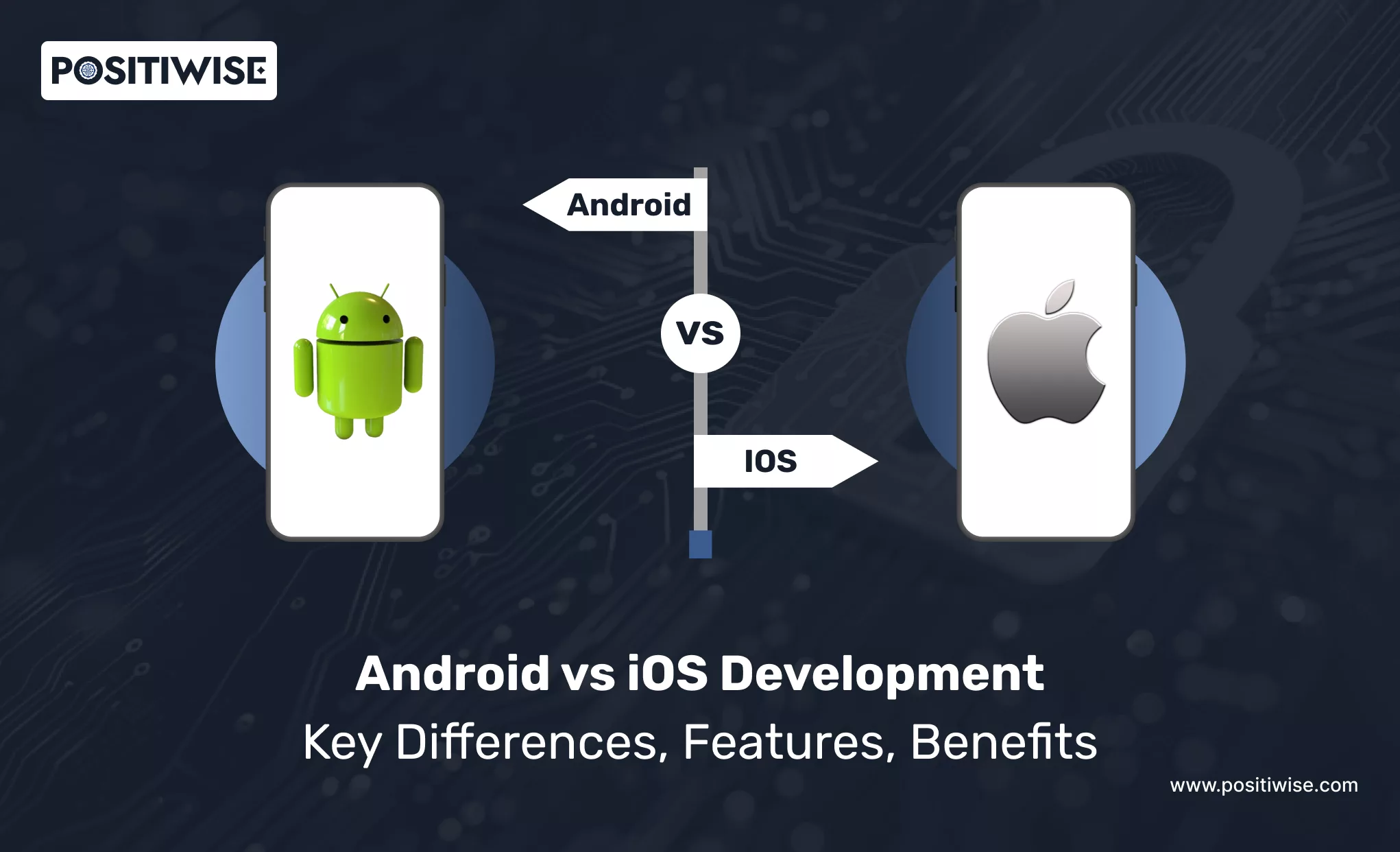
Mobile applications have transformed how businesses operate, interact with customers, and generate revenue. With Android and iOS as the leading platforms, businesses must choose the one that aligns with their goals. Each platform offers unique features, advantages, and challenges. This guide explores these differences in detail to help you make the right decision.
Overview of Android and iOS Development
Android and iOS collectively dominate the mobile app landscape, accounting for nearly all smartphones globally. Android boasts a market share of 70%, largely due to its affordability and availability across diverse devices in emerging markets like Asia and Africa. Its open-source nature allows for customization and innovation, enabling developers to create highly personalized applications. Android apps are typically built using Java or Kotlin, both of which are scalable and versatile.
Hire Android App Developers at Best Price!
In contrast, iOS, with a market share of 27%, focuses on premium audiences in developed markets like North America and Europe. Its apps are created using Swift or Objective-C, offering robust security and seamless performance due to Apple’s tightly controlled ecosystem. Known for their polished designs and smooth integration with Apple’s hardware, iOS apps are ideal for businesses targeting tech-savvy, high-spending users.
Hire iOS App Developers at Best Price!
Key Differences Between Android and iOS Development
Development Tools
Development Tools Android developers rely on Android Studio, which provides robust features like real-time layout editing, an advanced code editor, and Gradle-based builds for efficient management. Its compatibility with Windows, macOS, and Linux makes it highly accessible.
Meanwhile, iOS developers use Xcode, Apple’s proprietary IDE, which integrates seamlessly with its ecosystem. Xcode’s features include Swift Playgrounds for testing code snippets and advanced debugging tools, but it is restricted to macOS, requiring developers to invest in Apple hardware.
Programming Languages
Programming Languages Android apps are built using Java and Kotlin, each offering distinct advantages. Java, a long-standing choice, ensures compatibility and robustness, while Kotlin’s concise syntax and modern features enhance productivity and reduce code errors.
On the other hand, iOS development is centered on Swift, Apple’s programming language known for its speed, safety, and developer-friendly syntax. While Objective-C remains an option, Swift has rapidly become the standard for its simplicity and performance.
Design Guidelines
Design Guidelines Android apps follow Google’s Material Design, emphasizing flexible layouts, layered interfaces, and vibrant aesthetics to cater to the platform’s diverse range of devices. This allows developers creative freedom to design highly customizable user experiences.
In contrast, iOS apps adhere to Apple’s Human Interface Guidelines, which prioritize simplicity, elegance, and consistency. These guidelines ensure that apps maintain a cohesive look and feel across the Apple ecosystem, delivering a premium user experience.
Device Fragmentation
Device Fragmentation Android’s open ecosystem results in significant device fragmentation, with a vast array of devices from manufacturers like Samsung, Xiaomi, and OnePlus. This diversity requires developers to conduct extensive testing to ensure compatibility across different screen sizes, resolutions, and operating system versions.
On the other hand, iOS benefits from Apple’s controlled ecosystem, which includes a limited number of devices. This standardization simplifies optimization and testing, making it easier for developers to focus on app performance and user experience.
App Store Policies
App Store Policies Publishing apps on the Google Play Store is relatively straightforward, thanks to its quick and lenient review process. This allows developers to release updates rapidly, though it may compromise overall app quality.
Conversely, the Apple App Store enforces a rigorous review process that prioritizes quality, security, and adherence to Apple’s guidelines. While this process ensures high standards, it requires additional effort and time from developers to meet Apple’s strict criteria.
Market Reach
Market Reach Android dominates emerging markets due to its affordability and availability across various price points. Its global presence ensures that businesses can reach a diverse audience, making it a preferred choice for mass-market strategies.
In contrast, iOS targets premium users in developed regions. These users are generally more willing to spend on high-quality apps and services, making iOS an attractive platform for businesses aiming to maximize revenue through app purchases and subscriptions.
Features of Android and iOS Development
So, whether it is Android development or iOS development both precisely have their own set of features and benefits that separate the two, while, still keeping them great in their way. Here, let us take a look at the Android vs iOS development.
Features of Android Development
- Open-Source Nature: Android’s open-source platform allows developers unparalleled flexibility in customizing applications. This fosters innovation, enabling businesses to experiment with unique app features tailored to their audience’s needs. The open ecosystem also ensures access to an extensive library of tools and resources.
- Broad Device Compatibility: Android apps can run on various devices, from budget smartphones to high-end models. This compatibility broadens the app’s reach, making it ideal for businesses targeting diverse demographics and markets. Developers can cater to different user segments, enhancing app accessibility.
- Extensive Developer Community: Android boasts a large and active global developer community. This network ensures access to tutorials, forums, and resources for troubleshooting and collaboration. New developers can quickly find solutions, while seasoned professionals can leverage community insights to enhance app quality.
- Customizable Design Frameworks: Google’s Material Design framework allows for highly customizable layouts and dynamic animations. Developers have the freedom to create user-friendly and visually appealing designs that cater to specific brand requirements and user expectations.
Features of iOS Development
- Superior Security and Privacy: Apple’s stringent security measures protect user data and ensure apps meet high privacy standards. This makes iOS development ideal for businesses prioritizing sensitive information, such as financial or healthcare apps.
- Seamless Hardware-Software Integration: iOS apps benefit from Apple’s tight integration between hardware and software. This ensures optimized performance, reduced bugs, and a smooth user experience across all Apple devices, from iPhones to iPads.
- Consistent User Experience: Apple’s Human Interface Guidelines ensure a cohesive app design language. This consistency enhances usability and user satisfaction, making iOS apps highly appealing to tech-savvy users who value intuitive interfaces.
- Revenue-Generating Potential: iOS users are known for their higher spending habits on apps and in-app purchases. The platform offers businesses greater revenue potential through its loyal, high-value user base, particularly in premium markets.
Benefits of Android Development
- Wider Audience Reach: Android’s dominant market share and affordability allow businesses to target a vast global user base, including underserved regions. This reach allows for scalability and market penetration across diverse demographics.
- Affordable App Publishing: Android’s one-time Google Play Store registration fee makes it a cost-effective option for businesses and independent developers. This affordability lowers entry barriers, making it accessible for startups and small-scale enterprises.
- Flexibility and Innovation: Android’s open-source nature enables developers to experiment and integrate new technologies rapidly. This flexibility is ideal for businesses aiming to innovate and differentiate their offerings in competitive markets.
- Scalability Across Industries: Android’s versatility allows it to cater to various industries, from education and entertainment to healthcare and finance. This scalability ensures that businesses can adapt their applications to meet the specific needs of their target audience.
Benefits of iOS Development
- Loyal User Base: Apple’s strong brand loyalty translates into a stable and engaged user base for iOS apps. This loyalty ensures consistent app usage and creates opportunities for businesses to build long-term relationships with their audience.
- Better Monetization: iOS apps generate more revenue per user due to higher spending habits among Apple users. Businesses can capitalize on in-app purchases, subscriptions, and premium pricing models, making iOS development a profitable investment.
- Streamlined Testing: The controlled iOS ecosystem, with its limited number of devices, simplifies the testing process. This reduces development time and ensures apps are optimized for performance, resulting in a smooth user experience.
- Premium Brand Association: Developing for iOS aligns businesses with Apple’s reputation for quality and innovation. This premium association enhances brand credibility and appeals to high-value users seeking reliable and polished applications.
Factors to Consider When Choosing Between Android and iOS
There are several factors that you should consider diligently while choosing Android or iOS development. Given below is a list of a few that make all the difference.
- Target Audience: Android is ideal for businesses targeting a global audience, particularly in cost-sensitive markets. iOS, on the other hand, caters to premium users in developed regions, offering better monetization opportunities.
- Budget: Android development is generally more affordable due to its open-source nature and lower publishing fees. However, iOS development offers greater long-term profitability, making it worth the higher initial investment for certain business models.
- Timeline: iOS projects can be completed faster due to the standardized ecosystem and fewer devices. Android development may take longer because of the need to optimize for various devices and operating system versions.
- Maintenance: Android apps require frequent updates to ensure compatibility with new devices and operating systems. iOS apps are easier to maintain, thanks to Apple’s streamlined update process and controlled ecosystem.
- Monetization Strategy: Android is suitable for ad-based revenue models targeting mass audiences, while iOS is better for app purchases and subscriptions targeting high-value users.
Conclusion
The choice between Android and iOS development depends on your business goals, target audience, and resources. Android offers unmatched reach and flexibility, making it suitable for businesses targeting diverse demographics. iOS, with its premium ecosystem and higher revenue potential, appeals to brands prioritizing quality and profitability. By understanding the platforms’ differences, features, and benefits, businesses can make informed decisions to ensure success in the competitive mobile app landscape.


Expert in Marketing Strategy and Brand Recognition
Jemin Desai is Chief Marketing Officer at Positiwise Software Pvt Ltd, he is responsible for creating and accelerating the company’s marketing strategy and brand recognition across the globe. He has more than 20 years of experience in senior marketing roles at the Inc. 5000 Fastest-Growing Private Companies.